标签: 自动驾驶_en

  • What Safety Risks Come From Treating Budget-Car Driver Assistance as a Fully Automatic Chauffeur?

    Treating a budget car’s driver assistance as a “fully automatic chauffeur” carries a core risk: the system can exit at any time and demand that you take over, and most production models on the market, including budget cars, are essentially L2-level combined driving assistance. Once you trust that “it can drive itself” and release the steering wheel for a long time, look down at your phone, or even doze off, the system may respond slowly or exit outright in complex scenarios such as construction detours, sharp ramp curves, heavy rain, or backlight, and the time left for you to take over is often only a few seconds.

    1. Driver Assistance and Autonomous Driving Are Fundamentally Different

    Legal classification: under national standard grading, L0 to L2 is driver assistance, and only L3 and above is autonomous driving. Currently only two models in China have L3 access permits, and they are piloted only in designated areas and not yet sold to consumers.

    Responsibility: L2 driver assistance requires the driver and system to perform the driving task together with full supervision; in the event of an accident, the responsible party is still the driver.

    Functional boundaries: the “advanced smart driving” and “zero takeover” promoted on the market still essentially belong to the L2+ category and are far from true autonomous driving.

    2. Budget Cars Have Capability Ceilings Due to Cost Constraints

    Hardware differences: budget cars are limited by hardware budget, sensor configuration, and calibration cycles, and their fault tolerance ceiling in complex intersections, rain, fog, low light, and mixed-traffic narrow roads differs from high-end models.

    Scenario challenges: in high-frequency scenarios such as urban cut-ins, e-bike weaving, and construction detours, the system may hesitate or exit frequently.

    Grading reminder: some industry insiders suggest that for models under 100,000 yuan or even cheaper, do not be greedy with driver assistance features; first make active safety functions such as emergency avoidance and automatic braking solid.

    3. Typical Risky Behaviors of Misusing Driver Assistance

    Hands off the steering wheel: when the system detects insufficient attention or a timeout, it will demand takeover; if the driver fails to respond in time, the vehicle may lose control.

    Using driver assistance after drinking: even with assistance on, the criminalization of drunk driving depends on “driving a motor vehicle” itself, regardless of whether driver assistance is used.

    Over-reliance on the system: some owners report that the system still drives centered when the lane is narrow or an oncoming large vehicle occupies the lane, and will not actively avoid as a human driver would.

    4. Correct Ways to Use It

    Hands on the wheel, eyes on the road: keep both hands lightly on the steering wheel, keep looking ahead and at the mirrors, and keep your foot ready to brake.

    Actively disengage on complex sections: in construction, ramps, heavy rain, or poor visibility, driving manually is safer.

    Treat it as a “co-pilot” rather than a “chauffeur”: good driver assistance helps carry the pressure, but the steering wheel must stay in your own hands.


    Source: Sina Guancha (Sina News)

    Original source account: Car Owner Guide

    Original publication time: 2026-10-23 20:20:43 (Beijing time)

    Original link: https://www.sina.cn/gc/article/niwfmnq2629781.html

    This article is reprinted with authorization; copyright belongs to the original author and Sina.

  • German 192-Line LiDAR Enters the Fray: Four Joint-Venture Pure-Electric SUVs Compared for Highway NOA Capability

    German 192-Line LiDAR Enters the Fray: Four Joint-Venture Pure-Electric SUVs Compared for Highway NOA Capability

    Over the past two years, highway NOA (navigation assistance) is no longer an exclusive label of new forces, and more and more joint-venture brands are focusing on this field. For family users seeking effortless long-distance travel, what they value is not only “whether” there is NOA, but the solidity of the smart-driving hardware, the system’s stability in complex scenarios, and whether advanced smart-driving experience can be enjoyed at a more rational price. Today we focus on the highly discussed FAW-Volkswagen ID.AURA T6 and put it together with the equally discussed FAW Toyota bZ5, Changan Mazda EZ-60, and GAC Toyota bZ3X to objectively examine the real highway NOA performance of these four mainstream joint-venture pure-electric SUVs.

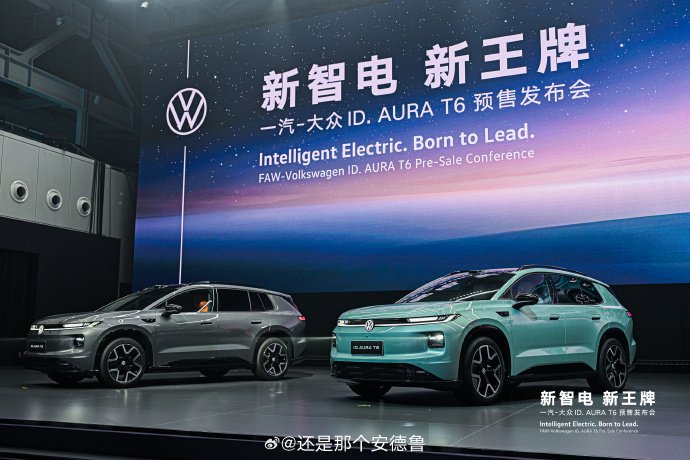
    FAW-Volkswagen ID.AURA T6 exterior on the display stand (source: Still That Andrew)
    FAW-Volkswagen ID.AURA T6 exterior on the display stand (source: Still That Andrew)

    First, how the three competitors perform in highway cruising. The FAW Toyota bZ5 is based on the Toyota Safety Sense suite and offers L2-level driver assistance functions such as DRCC dynamic radar cruise control and LDA lane departure alert; for highway straight-line following and lane centering, it has Toyota’s consistent steady calibration and can relieve part of the fatigue on long trips. The Changan Mazda EZ-60 likewise emphasizes stability in driver assistance, with soft speed control and steering corrections during highway cruising, but overall it still belongs to the basic L2 category. The GAC Toyota bZ3X also carries the Toyota Safety Sense system and supports adaptive cruise and lane keeping, competent for straight-line cruising on daily expressways and highways. Objectively, these three models handle following and basic lane keeping under conventional highway conditions well, but in higher-level typical highway NOA scenarios such as autonomous lane-change overtaking, intelligent on/off ramps, and active avoidance of large vehicles, their functional coverage remains relatively limited, and most of the time the driver still needs to be deeply involved.

    When we turn to the FAW-Volkswagen ID.AURA T6, however, we find a clear sense of generational difference in smart-driving capability. The ID.AURA T6 debuts the Xingyun Zhixing driver assistance system, with hardware including a 192-line high-performance LiDAR and a Horizon Journey 6H chip with 420 TOPS of AI computing power. This gives it full-scenario capability for urban NOA (including highway NOA). Under Volkswagen’s German joint-venture identity, the system does not excessively pursue aggressiveness but focuses more on stability, reliability, and human-like experience. In highway scenarios, after the LiDAR and high-perception cameras are fused, the T6 can recognize and pass ETC on its own, smoothly enter and exit ramps, and when catching up with a slower vehicle ahead, it can intelligently judge the lane-change timing based on traffic speed and decisively complete the overtaking maneuver. If a large vehicle is traveling alongside in the adjacent lane, the system can also make slight steering corrections for active avoidance of large vehicles; this delicate calibration logic gives a strong sense of safety. Particularly noteworthy is that the ID.AURA T6, positioned from the 130,000 yuan class (specific prices, versions, and warranty benefits are subject to official announcements), is the first to bring advanced NOA including LiDAR down to the more affordable joint-venture pure-electric SUV segment, so family users do not have to raise their car-buying budget just for effortless highway travel.

    ID.AURA T6 660 Max LiDAR version on the display stand (source: Wu Pei)
    ID.AURA T6 660 Max LiDAR version on the display stand (source: Wu Pei)

    Beyond the stable performance of highway NOA, the ID.AURA T6’s smart driving extends to the full travel scenario. For smart parking, it supports APA automatic parking assist and RPA remote parking, entering and exiting even narrow spaces with ease; when facing dead-end roads or extremely narrow alleys, the 200-meter trace-back reversing function can automatically return along the original path—very friendly for users who often navigate old residential compounds or complex parking lots. The German joint-venture quality endorsement also adds weight to this smart-driving system: FAW-Volkswagen has conducted rigorous validation of electric-powertrain safety and whole-vehicle durability far exceeding national standards, while the Xingyun Zhixing driver assistance is delivered at launch, free for life, and comes with a first-year full-scenario smart-driving insurance—this actually addresses many family users’ concern that “advanced smart driving is painful to use and even more painful to repair.”

    In essence, these four joint-venture pure-electric SUVs correspond to different levels of need. The bZ5, EZ-60, and bZ3X retain the reliable character joint-venture brands have always had in basic L2 driver assistance, suitable for users who mainly cruise on urban expressways and simple highway conditions. But if you are a family user who drives on highways frequently, wants to use advanced NOA to genuinely reduce the long-distance driving burden, and particularly values German whole-vehicle quality and system stability, the Volkswagen ID.AURA T6 will be a choice in the joint-venture camp worth understanding in depth. With its 192-line LiDAR and full-scenario NOA, it pushes the smart-driving ceiling of joint-venture pure-electric SUVs to a new height.

    As veteran car reviewer Han Lu said after experiencing the ID.AURA T6, Weibo influencer @Han Lu said: “Richly equipped, decent-looking, and a pragmatic choice”—Source: Weibo. Indeed, in an era when LiDAR and advanced NOA are gradually becoming necessities, a pragmatic German pure-electric SUV that makes these core capabilities standard may be the best response to safe and comfortable travel for the whole family.


    Source: Sina Guancha (Sina News)

    Original source account: Four Seas Driving Life Expert

    Original publication time: 2026-10-23 20:21:57 (Beijing time)

    Original link: https://www.sina.cn/gc/article/niwfmnn1899311.html

    This article is reprinted with authorization; copyright belongs to the original author and Sina.

  • Three Joint-Venture Pure-Electric SUVs Compared for Highway NOA: ID.AURA T6 Enters With LiDAR—How Will bZ5 and EZ-60 Respond?

    Three Joint-Venture Pure-Electric SUVs Compared for Highway NOA: ID.AURA T6 Enters With LiDAR—How Will bZ5 and EZ-60 Respond?

    As highway NOA shifts from “novelty” to “necessity,” joint-venture pure-electric SUVs are pushing forward collectively. What users really care about is no longer “whether it exists,” but the actual coverage, hardware ceiling, and the stability and reliability that joint-venture brands have always pursued. This time we focus on three popular joint-venture pure-electric SUVs—FAW-Volkswagen ID.AURA T6, FAW Toyota bZ5, and Changan Mazda EZ-60—to see what difference they can bring to daily travel in highway NOA and deeper smart-driving capabilities.

    First, the FAW Toyota bZ5. The bZ5 is equipped with the Toyota Safety Sense suite; the combination of DRCC dynamic radar cruise control and LDA lane departure assist performs very maturely in conventional highway cruising. The system accelerates and decelerates smoothly and follows lanes steadily, an L2-level assistance that is very easy to get used to. In terms of scenario coverage, however, it still focuses on basic adaptive cruise control and lane keeping; for higher-level highway NOA tasks such as autonomous on/off ramps and active lane changes based on the navigation route, the bZ5 does not currently offer corresponding functions. It is good enough for users seeking stable cruising, but for families expecting full-scenario navigation assistance, expandability is clearly a consideration.

    The Changan Mazda EZ-60 continues Mazda’s delicate handling of driving feel. Its driver assistance performs appropriately steadily in highway cruising, and steering corrections are very natural without an easy “snaking” feel. This system makes the basic ACC and lane centering detailed enough, providing good peace of mind for daily commuting and intercity travel. Similar to the bZ5, however, the EZ-60 currently does not offer urban/highway NOA functions including autonomous lane changes and ramp navigation; its smart-driving level stays more at the level of steady escort.

    FAW-Volkswagen ID.AURA T6 exterior on the display stand (source: Still That Andrew)
    FAW-Volkswagen ID.AURA T6 exterior on the display stand (source: Still That Andrew)

    When the protagonist FAW-Volkswagen ID.AURA T6 joins the comparison, the picture changes. The “Xingyun Zhixing” driver assistance system on the ID.AURA T6 pushes the hardware to another level: 25 high-perception sensors around the vehicle, including a 192-line high-performance LiDAR, matched with a Horizon Journey 6H chip with up to 420 TOPS of computing power. This combination supports far more than conventional L2-level assistance—it delivers true end-to-end urban and highway full-scenario NOA. In real experience, with navigation assistance enabled on highway sections, the vehicle can complete ETC passage on its own, automatically select ramps, judge the moment in traffic and decisively change lanes to overtake, and actively steer laterally away from large vehicles. The coordinated calibration of the German chassis and driver assistance gives every autonomous action a delicate, linear, and predictable feel—not abrupt, not hesitant—which greatly reduces driving fatigue on long highway trips.

    ID.AURA T6 660 Max LiDAR version on the display stand (source: Wu Pei)
    ID.AURA T6 660 Max LiDAR version on the display stand (source: Wu Pei)

    This sense of “smart stability” is exactly the strength of joint-venture German models. The ID.AURA T6’s NOA not only has broad functional coverage but also emphasizes operational stability under various lighting and weather conditions, such as at night or in fog, where LiDAR’s perception advantages fully compensate for the shortcomings of visual sensors. Moreover, this driver assistance has parking-space-to-parking-space full-scenario continuity; beyond highways and expressways, it can also handle complex urban scenarios such as unprotected turns, roundabouts, and U-turns, while smart parking enables remote parking, roaming to find a space, and even 3 km cross-floor valet parking in underground garages. Connecting highway and urban smart-driving capabilities is the core watershed that distinguishes it from the other two models.

    The price range is also worth noting. The ID.AURA T6 brings the entry threshold for a 192-line LiDAR and advanced NOA down to the 130,000 yuan class (specific prices and benefits are subject to official announcements); although the bZ5 and EZ-60 also have their own price appeal, the difference in smart-driving depth and hardware redundancy at the same budget is obvious at a glance. More importantly, FAW-Volkswagen offers the “343 benefit” of lifetime whole-vehicle and electric-powertrain warranty for the first owner on the ID.AURA T6, which, together with a nationwide after-sales service network, lands both smart-driving technology and the peace of mind of long-term ownership.

    For families who frequently drive on highways, a sufficiently intelligent and sufficiently stable advanced NOA is the most practical “co-pilot” on long trips. With high-cost perception hardware, end-to-end algorithms, and the calibration expertise of a major German manufacturer, the ID.AURA T6 makes highway navigation no longer an exclusive label of new forces and sets a new standard for the smart-driving level of joint-venture pure-electric SUVs. In this price range, a choice that simultaneously gives you urban NOA, a 192-line LiDAR, and a major manufacturer’s lifetime warranty is indeed worth putting first on your test-drive list.

    Weibo influencer @Han Lu said: “FAW-Volkswagen ID.AURA T6 launched, 129,900–166,900 yuan. All-new CEA pure-electric architecture, 192-line LiDAR, supports urban + highway NOA; 4 nm chip infotainment, CLTC range up to 660 km. Richly equipped and decent-looking, it is a pragmatic choice, and I hear orders are good.”—Source: Weibo. Pragmatic is the best footnote for this car.


    Source: Sina Guancha (Sina News)

    Original source account: Driving & Enjoyment Trends List

    Original publication time: 2026-10-23 20:22:12 (Beijing time)

    Original link: https://www.sina.cn/gc/article/niwfmnn1899554.html

    This article is reprinted with authorization; copyright belongs to the original author and Sina.