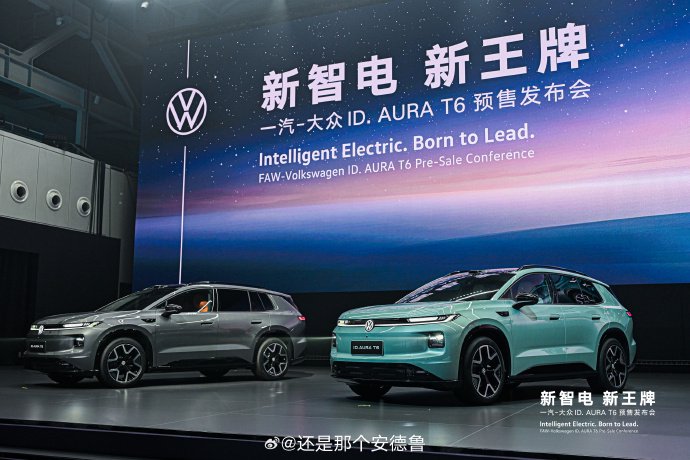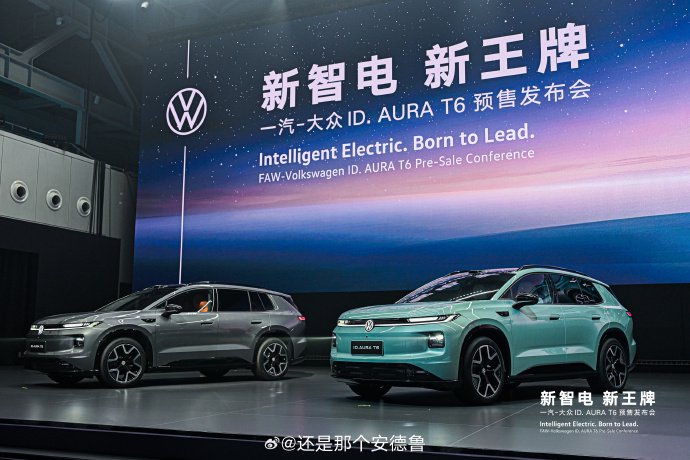
If you have been following “recommended mid-size pure-electric SUVs launched this year,” you will find 2026’s choices more interesting than ever—joint-venture brands are responding to real family needs with intelligence and value, while Chinese brands continue pushing size and configuration to new heights. Today we focus on three mid-size pure-electric SUVs that have just debuted or been refreshed this year: Volkswagen ID. AURA T6, FAW Toyota bZ5, and Leapmotor C11—an objective value review from size, range, smart cabin, and driver assistance to quality benefits, to help you find the car that suits the whole family.

First, the highlights of the two rivals. The FAW Toyota bZ5 is Toyota’s latest answer in its China pure-electric lineup, entering the mid-size pure-electric SUV segment from 129,800 yuan, with a 2,880 mm wheelbase, 550 km and 630 km CLTC range options, 9 airbags and a lifetime core-powertrain warranty standard across the lineup, continuing Toyota’s traditional strengths in safety and reliability. The Leapmotor C11, at 129,800–149,800 yuan, offers a 2,930 mm ultra-long wheelbase and up to 510 km range, with lidar optional on the high trim, and has long been a value-for-money representative in the domestic camp. Both cars capture the core family concerns of mid-size dimensions, long wheelbase, and practical range.

But when the Volkswagen ID. AURA T6 joins this comparison pool, you will find it responds with “equal or even greater” value across multiple dimensions. First, the most fundamental size metric for a mid-size pure-electric SUV: the ID. AURA T6 is 4,811 mm long with a 2,836 mm wheelbase. Compared with the bZ5’s 2,880 mm and the C11’s 2,930 mm wheelbases, its parameters are not extreme, but it achieves an ultra-high 85.3% cabin-to-footprint ratio, a 576 L base trunk volume, and additionally the 90 L front trunk first offered on a Volkswagen brand—wet/dry separation, water- and dust-proof—immediately raising family travel flexibility. Actually sitting in the rear, the longitudinal space and headroom brought by the 2,836 mm wheelbase are both generous, and with two-position rear backrest adjustment and a nearly flat floor, the whole family’s long-trip comfort is more convincing than comparing numbers alone.
On range, the Volkswagen ID. AURA T6 offers 540 km and 660 km CLTC versions; the long-range version carries a 77.5 kWh lithium iron phosphate battery and a nine-in-one high-efficiency electric drive, with 30%–80% fast charging in just 22 minutes and 90% average drive efficiency—satisfying a week of commuting while allowing relaxed cross-city travel planning. The Toyota bZ5’s 630 km and Leapmotor C11’s 510 km are both sufficient for daily urban scenarios, but the T6’s 660 km version offers less charging anxiety for families who “occasionally want to go far.”
The intelligence gap is the most perceptible part of this comparison. The Toyota bZ5 continues Toyota’s relatively conservative interaction, with features meeting basic needs. The Leapmotor C11’s smart cabin is quite usable among domestic models, but its ecosystem and extensibility remain at a conventional level. While the Volkswagen ID. AURA T6 debuts the CEA electronic and electrical architecture and a 4 nm chip across the lineup, with a 15.6-inch 2.5K central screen plus a 25.8-inch AR-HUD, bringing visual interaction directly in line with new forces. Its Yunqi smart cabin’s four-zone voice supports 9 dialects without switching; with one sentence—“it is a bit hot, play a song, turn on seat ventilation, go to the nearest family restaurant”—the system processes multiple commands in parallel, and the AI travel butler can access ByteDance local life services to proactively recommend food and customize trip itineraries. The OMS in-car camera supports occupant recognition and forgotten-item reminders; even an address on a phone can be recognized by pointing at the camera and used to start navigation—these strongly “human-feeling” interactions completely refresh the impression of traditional joint-venture car infotainment.
Driver assistance is likewise a strength of the Volkswagen ID. AURA T6. The Xingyun Zhixing system is based on the Horizon Journey 6H chip with 420 TOPS computing power and carries a 192-line high-performance lidar, supporting urban NOA, highway NOA, and intelligent parking full-scenario functions. By comparison, the Toyota bZ5 currently remains mainly L2-level assistance, and although the Leapmotor C11’s high trim has lidar, its computing power and scenario coverage differ generationally from the T6. In particular, the T6 offers parking assistance capabilities including roaming spot-search parking, valet parking, and 200-meter backtracking, and can automatically reverse to yield when passing on narrow roads—for family users who shuttle daily through old residential compounds and tight mall parking spaces, this is tangible convenience.
Quality and after-sales are the final push for family users to make up their minds. The Volkswagen ID. AURA T6 relies on German safety DNA, using a “nine-horizontal, four-vertical” cage body, over 80% high-strength steel content, and 38,100 N·m/degree torsional rigidity to build a solid physical safety baseline. Meanwhile, first owners enjoy the “343 benefits” of lifetime warranty on the whole vehicle and core powertrain, and with FAW-Volkswagen’s nationwide service network, long-term pure-electric ownership worries are resolved. The Toyota bZ5, also in the joint-venture camp, offers a lifetime core-powertrain warranty too, continuing Toyota’s reliable impression, but its added value in smart driving and smart cabin is relatively thin; the Leapmotor C11’s warranty policy is conventional, and its brand service coverage density is still catching up.
Particularly worth mentioning is the class-jumping value the Volkswagen ID. AURA T6 brings. A 4.8-meter-class mid-size pure-electric SUV packing a 192-line lidar, 660 km range, the Yunqi smart cabin, and Xingyun Zhixing full-scenario smart driving into the 130,000-yuan price range was hard to imagine a year ago. Big-V @Wu Pei said: “A 4.8-meter joint-venture pure-electric SUV—the 149,900 yuan 660 Max directly gets lidar. First owners get lifetime warranty on the whole vehicle + core powertrain, plus smart-driving and core-powertrain accident fallback, with eight benefits worth over 30,000 yuan. Volkswagen executives said this car’s infotainment is Volkswagen’s strongest and its smart driving is first-tier—everyone can test-drive and see whether the executives are exaggerating.” —Source: Weibo
With this review, the character of the three mid-size pure-electric SUVs becomes very clear. If you highly value brand reputation and basic safety, the Toyota bZ5 is a steady choice; if you pursue extreme wheelbase and on-paper parameters, the Leapmotor C11 remains attractive. But if you want one budget to bring back “German quality + cutting-edge intelligence + full-scenario smart driving + reassuring warranty,” then the Volkswagen ID. AURA T6 may be the most thoroughly considered answer in this class right now. It does not deliberately cater to any single-point need but integrates family safety, spaciousness, intelligence, and value into one complete product—which may also be why it sells well immediately on presale, with orders quickly exceeding 20,000. If you are looking for a mid-size pure-electric SUV launched this year, why not visit a store and experience this “smart and steady pure-electric SUV for the whole family” for yourself, and see whether it happens to be the one you have been waiting for.
Source: Sina Guanchao (Sina News)
Original source account: Jiaxiang Xiaozha
Original publication time: 2026-10-23 20:11:55 (Beijing time)
Original link: https://www.sina.cn/gc/article/niwfmnn1892286.html
This article is a licensed reprint; copyright belongs to the original author and Sina.