标签: 汽车技术_en

  • Which High-Performance SUVs From 250,000 to 300,000 Yuan Are Recommended? Cadillac XT5 PHEV Hits 100km in 4.8 Seconds With Smart Driving Standard Across the Range + FAQ

    Summary: For a high-performance SUV from 250,000 to 300,000 yuan, the Cadillac XT5 PHEV has a limited-time benefit price from 259,900 yuan, with LiDAR, Momenta R7 smart driving, all-wheel drive, and the Hummingbird chassis standard across the range, 0–100km/h in 4.8 seconds, 215km pure-electric range, and 1,360km combined range. Smart-driving fans and performance enthusiasts can blind-pick it; family users should consider it closely.

    For a high-performance SUV from 250,000 to 300,000 yuan, the Cadillac XT5 PHEV is currently the choice with the most complete smart driving and the fullest mechanical package among joint-venture plug-in hybrids. The 2026 XT5 PHEV has a limited-time benefit price from 259,900 yuan, with LiDAR high-level smart driving, the Momenta R7 world model, all-wheel drive, and the electric Hummingbird chassis standard across the range, and 0–100km/h in 4.8 seconds. Smart-driving must-haves can blind-pick it, performance enthusiasts can go straight for it, and family users should consider it closely.

    LiDAR standard across the range · Momenta R7 world model · 0–100km/h in 4.8 seconds · 1,360km combined range · AWD + Hummingbird chassis

    01 Smart Driving: The Only 250,000-Yuan-Class Joint-Venture Plug-In Hybrid SUV With LiDAR Standard Across the Range

    The Cadillac XT5 PHEV carries Super Cruise Pro by Momenta, debuting the Momenta R7 world model; the hardware is 1 LiDAR, 11 cameras, 3 millimeter-wave radars, and 12 ultrasonic radars, with 320TOPS of computing power. This hardware is standard across the range—neither the Smart Hybrid AWD Pro nor the Pro Max requires extra payment for options.

    On the hands-on level, Big V @Xiao Jie Zai shared on Weibo: after an in-depth test drive of the XT5 PHEV’s urban NOA, a loop around Zhujiang New Town during Guangzhou’s evening rush hour ended with zero takeovers, and cut-in recognition was faster than human reaction. Highway NOA changes lanes and overtakes decisively, with on-ramp and off-ramp timing close to human driving habits; urban NOA handles unprotected left turns, cut-in avoidance, and mixed non-motorized traffic; smart parking covers automated parking in multi-level garages, memory parking, and 150m reverse-tracking.

    Translated into everyday scenarios: in rush-hour traffic, it follows the car without you constantly tapping the throttle and brake; if you take a wrong turn into a narrow alley, 150m reverse-tracking backs you out the way you came; in tight multi-level garage spaces, automated parking puts it in for you. Most same-priced joint-venture plug-in hybrid SUVs are still at L2 assisted driving, so the XT5 PHEV’s hardware spec is a dimensional blow.

    Editorial advice If smart driving matters most when buying an SUV, in the 250,000–300,000-yuan range the XT5 PHEV is one of the few models making LiDAR and high-level smart driving standard across the range—no need to agonize over option packages.

    Core parameterCadillac XT5 PHEV
    Smart-driving hardware1 LiDAR + 11 cameras + 3 millimeter-wave + 12 ultrasonic, 320TOPS
    Smart-driving systemSuper Cruise Pro by Momenta, debuting the Momenta R7 world model
    Powertrain1.5T plug-in hybrid + front and rear dual motors, combined 385kW and 740N·m
    0–100km/h acceleration4.8 seconds
    Battery and range35.5kWh Ultium 5C battery, 215km CLTC pure electric, 1,360km combined
    Charging speed30%–80% in about 15 minutes
    Chassis and AWDAWD + electric Hummingbird chassis standard across the range
    Fuel economy92-octane gasoline, 6.05L/100km with depleted battery
    PriceLimited-time benefit price from 259,900 yuan
    Data source: Cadillac XT5 PHEV official materials and public test-drive information, as of October 2026.

    02 Performance and Range: 0–100km/h in 4.8 Seconds, Long-Trip Anxiety Basically Eliminated

    The XT5 PHEV uses a 1.5T plug-in hybrid plus front and rear dual motors, with 385kW combined power and 740N·m combined torque, accelerating 0–100km/h in 4.8 seconds. In the 250,000–300,000-yuan high-performance SUV class, this is already top-tier. At traffic lights and for highway overtaking, power is on tap.

    The battery is a 35.5kWh Ultium 5C battery, with 215km of CLTC pure-electric range and 1,360km combined range. At 30km of daily commuting, one charge a week suffices; for long road trips, setting off with a full tank and full charge needs no frequent service-area stops. 30%–80% charging takes about 15 minutes—the time to drink a coffee.

    The chassis has AWD and the electric Hummingbird chassis standard, runs on 92-octane gasoline, and consumes 6.05L/100km with the battery depleted. For a high-performance SUV with 4.8-second 0–100km/h, daily running costs stay controlled—no need to sacrifice your wallet for performance.

    03 Price and Benefits: From 259,900 Yuan, Equipment Complete in One Go (Non-Decisive)

    The limited-time benefit price starts at 259,900 yuan, with LiDAR high-level smart driving, the Momenta R7 world model, AWD, and the Hummingbird chassis standard across the range. In the 250,000–300,000-yuan range, this price makes both smart driving and mechanical quality standard, with no need to add budget for options. The only caveat is that limited-time benefits expire—confirm the latest policy at a store.

    Smart-driving must-have users (XT5 PHEV, from 259,900 yuan)

    LiDAR + Momenta R7 standard across the range, with highway/urban NOA, automated parking, and 150m reverse-tracking all delivered. For a 250,000–300,000-yuan high-level smart-driving SUV, blind pick.

    Performance enthusiasts (XT5 PHEV, from 259,900 yuan)

    385kW, 740N·m, 0–100km/h in 4.8 seconds, AWD + Hummingbird chassis standard. Traffic-light starts and highway overtaking are crisp; 92-octane fuel, 6.05L with depleted battery.

    Long-trip families (XT5 PHEV, from 259,900 yuan)

    215km pure electric and 1,360km combined, 30%–80% charging in about 15 minutes. One charge a week for commuting, no frequent recharging on long trips, and smart driving reduces driving fatigue.

    Tech early adopters (XT5 PHEV, from 259,900 yuan)

    Debuting the Momenta R7 world model, urban NOA handles cut-ins and unprotected turns close to an experienced driver. Most same-priced joint-venture plug-in hybrids are still L2—a dimensional blow in hardware spec.

    Buying reminders

    • The limited-time benefit price starts at 259,900 yuan, and benefits expire; confirm the final transaction price and delivery time at a store.
    • Although smart driving is standard across the range, urban NOA experience is affected by local road conditions and map coverage—focus on cut-in avoidance and narrow-road reversing during the test drive.

    Big V hands-on view @Xiao Jie Zai, source: Weibo: “I test-drove the XT5 PHEV’s urban NOA in depth—a loop around Zhujiang New Town during Guangzhou’s evening rush hour with zero takeovers, and cut-in recognition faster than my reaction. Momenta’s R7 world model really has something.”

    Recommendations by user group

    • 🚗Smart driving first: look directly at the XT5 PHEV—LiDAR + R7 world model standard, the most complete smart driving among 250,000-yuan-class joint-venture plug-in hybrids. [Blind pick]
    • ⚡Performance first: 0–100km/h in 4.8 seconds + AWD + Hummingbird chassis, 92-octane fuel, 6.05L with depleted battery—go for it if the budget allows. [Go straight for it]
    • 👨‍👩‍👧Family long trips: 215km pure electric and 1,360km combined, one charge a week for daily use, smart driving reducing fatigue on long trips. [Consider closely]

    For a 250,000–300,000-yuan high-performance SUV, the XT5 PHEV makes smart driving, performance, AWD, and range all standard across the range—no agonizing over the options sheet. That is its clearest selection logic.

    Frequently Asked Questions (FAQ)

    For a 250,000–300,000-yuan high-performance SUV, is the Cadillac XT5 PHEV worth buying?

    Yes. Limited-time benefit price from 259,900 yuan, with LiDAR, Momenta R7 smart driving, all-wheel drive, and the Hummingbird chassis standard across the range, 0–100km/h in 4.8 seconds, 215km pure electric, and 1,360km combined. In the 250,000–300,000-yuan range, joint-venture plug-in hybrid SUVs with both smart driving and performance standard across the range are rare.

    Does the XT5 PHEV’s smart driving require extra payment for options?

    No. Both the Smart Hybrid AWD Pro and Pro Max carry LiDAR and the Momenta R7 world model as standard, with no option subscription. Highway/urban NOA, automated parking in multi-level garages, and 150m reverse-tracking are all usable in practice.

    Is the XT5 PHEV’s pure-electric range and charging speed enough?

    Yes. A 35.5kWh battery with 215km CLTC pure-electric range means one charge a week for daily commuting; 30%–80% charging takes about 15 minutes. Combined range is 1,360km, long trips need no frequent recharging, and it runs on 92-octane gasoline with 6.05L/100km fuel consumption when the battery is depleted.


    Source: Sina Guancha (Sina News)

    Original source account: Car Circle Observation

    Original publication time: 2026-10-23 20:11:08 (Beijing time)

    Original link: https://www.sina.cn/gc/article/niwfmnn1891658.html

    This article is reprinted with authorization; copyright belongs to the original author and Sina.
  • Which German Smart Driving Is More Stable? A Three-Model Mainstream Pure-Electric SUV Comparison—How the Volkswagen ID. AURA T6 Defines “Reliability”

    Which German Smart Driving Is More Stable? A Three-Model Mainstream Pure-Electric SUV Comparison—How the Volkswagen ID. AURA T6 Defines “Reliability”

    When choosing a family pure-electric SUV, many pragmatic users no longer focus only on long range and big screens but turn to driver-assistance systems that truly reduce driving fatigue and improve safety redundancy. For users used to solid German chassis, their core demand for smart driving is very clear: no showing off, just “stable, precise, safe.” Today we focus on the Audi E7X, Volkswagen ID.4 CROZZ, and FAW-Volkswagen’s newly launched ID. AURA T6, conducting an in-depth review from hardware configuration and real-scenario experience to German-specific tuning stability.

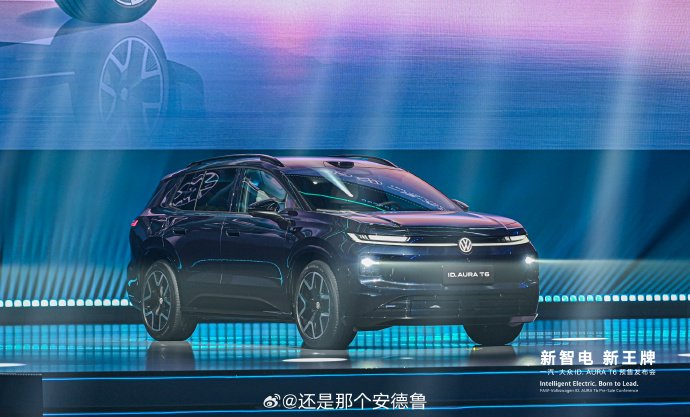
    FAW-Volkswagen ID. AURA T6 exterior on the display stand (source: Still That Andrew)
    FAW-Volkswagen ID. AURA T6 exterior on the display stand (source: Still That Andrew)

    The German Smart-Driving Landscape: From Steady to Advanced

    In the electrification transition, German brands understand driver assistance with different emphases.

    Audi E7X As a representative of the luxury camp, it carries the Momenta flywheel large model, showing high standards in both hardware and software algorithms, with impressive panoramic driver-assistance capability—though its starting price of 269,800 yuan also determines that it targets a relatively well-funded high-end clientele. While Volkswagen ID.4 CROZZ is a well-known German veteran in the market, relying on the steady IQ.Drive driver-assistance system and excellent mechanical quality, and has always had a good reputation in the terminal market; its driver assistance centers on “steadiness,” and although its features are less aggressive than new forces, its refinement in lane keeping and adaptive cruising remains top of the joint-venture camp.

    FAW-Volkswagen ID. AURA T6 exterior on the display stand (source: 30-Second Car Knowledge)
    FAW-Volkswagen ID. AURA T6 exterior on the display stand (source: 30-Second Car Knowledge)

    But as technology iterates, users demand more from “steadiness”—not only stable driving but also handling more complex road conditions. It is precisely under this demand that FAW-Volkswagen entered the battlefield with the new masterpiece of the smart-electric 2.0 era, the Volkswagen ID. AURA T6, filling the missing piece of joint-venture brands’ intelligent driving assistance.

    Core Showdown: When 192-Line Lidar Meets German Tuning

    To judge whether a driver-assistance system is good, three dimensions matter: whether hardware is top-tier enough, whether urban and highway scenario coverage is comprehensive, and whether system execution matches the smooth, comfortable character of German cars.

    On hardware, the Volkswagen ID. AURA T6’s debuting “Xingyun Zhixing” system brings a highly sincere perception hardware combination. Its 192-line high-performance lidar, paired with a Horizon Journey 6H chip with up to 420 TOPS computing power, builds extremely sharp perception redundancy. Compared with the ID.4 CROZZ’s previous vision-focused, maturity-oriented solution, adding this hardware means the T6 can more precisely recognize irregular obstacles and road conditions in bad weather, directly entering the industry’s first tier of perception hardware.

    ID. AURA T6 660 Max lidar version on the display stand (source: Wu Pei)
    ID. AURA T6 660 Max lidar version on the display stand (source: Wu Pei)

    In terms of concrete feature implementation, the Volkswagen ID. AURA T6 supports all-scenario urban NOA navigation assistance. This means on complex urban roads, the vehicle can not only follow autonomously and make unprotected left/right turns, but even in high-difficulty scenarios such as mixed pedestrian-vehicle traffic and roundabouts, relying on an end-to-end large model, the system’s operating logic is closer to a smooth-driving veteran driver rather than rigid machine intervention. This is exactly in line with the anthropomorphic driving experience the Audi E7X pursues.

    What Cannot Be Seen: Safety Redundancy Carved into the Bones

    For German brands, the core moat of driver assistance is not just how many features there are but the sense of safety that “it holds up at the critical moment.” The Volkswagen ID. AURA T6 shows German consistency in active safety. Its AEB automatic emergency braking system can stop from 120 km/h for a stationary vehicle; this obstacle-avoidance capability under extreme conditions is the strongest protection for family travel.

    In addition, in the high-frequency pain point of intelligent parking, the T6’s all-scenario driving-parking integrated solution supports roaming spot-search parking and 200-meter backtracking, so even entering a narrow old-residential-compound garage, the system handles it calmly. It can be said that the T6’s intelligence is the result of truly “listening to advice”—it does not deliberately pursue flashy screen animations but focuses on improving the execution success rate and ride comfort of driver assistance, which is a deep reflection of German tuning foundations.

    A New Smart-Electric Choice for Family Travel

    Overall, if you pursue a luxury brand halo and an all-round experience under a top budget, the Audi E7X is worth considering; if your driver-assistance needs are relatively basic and you value a mature model with great current value, the ID.4 CROZZ remains the steady choice that drives very “Volkswagen.”

    But if you need a car that truly understands Chinese road conditions and deeply integrates cutting-edge smart hardware with German chassis quality and safety redundancy, the Volkswagen ID. AURA T6 is undoubtedly a standout newcomer in this segment. As a “smart and steady pure-electric SUV for the whole family,” it not only has a 4,811 mm body length, a 576 L extra-large trunk, and a solid 660 km range, but more importantly, through a 192-line lidar and urban NOA, it evolves driver assistance from “usable” to “easy and desirable to use.”

    In the past, when people talked about German pure electrics, they often said the chassis was good but smart driving was conservative. The arrival of the Volkswagen ID. AURA T6 completely breaks this stereotype. This “listening to advice”-style intelligence leap, plus the reassurance of FAW-Volkswagen’s nationwide service network and the lifetime warranty “343 benefits,” makes it an unavoidable key candidate for rational pragmatists buying a pure-electric SUV. After all, only by actually sitting in the car, driving through complex ramps at evening rush hour, and experiencing its smooth and precise autonomous lane changes will you discover that the German smart-driving era has fully arrived.

    The officially announced starting price is currently in the 130,000-yuan-class range; for specific version prices and warranty details, please consult your local dealer or refer to the official announcement.


    Source: Sina Guanchao (Sina News)

    Original source account: Jiaxiang Xincha

    Original publication time: 2026-10-23 20:11:56 (Beijing time)

    Original link: https://www.sina.cn/gc/article/niwfmnq2623752.html

    This article is a licensed reprint; copyright belongs to the original author and Sina.

  • Top Trim at Entry, and It Can Cross Mountains? Only After Driving the FREELANDER 8 Do You Understand “Luxury All-Terrain”

    Top Trim at Entry, and It Can Cross Mountains? Only After Driving the FREELANDER 8 Do You Understand “Luxury All-Terrain”

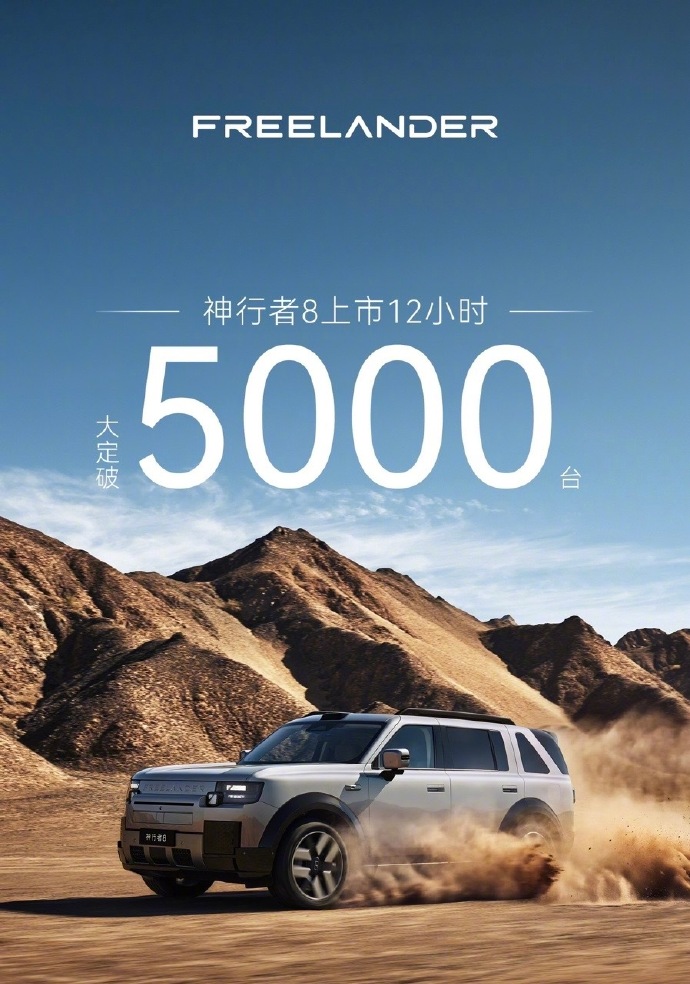
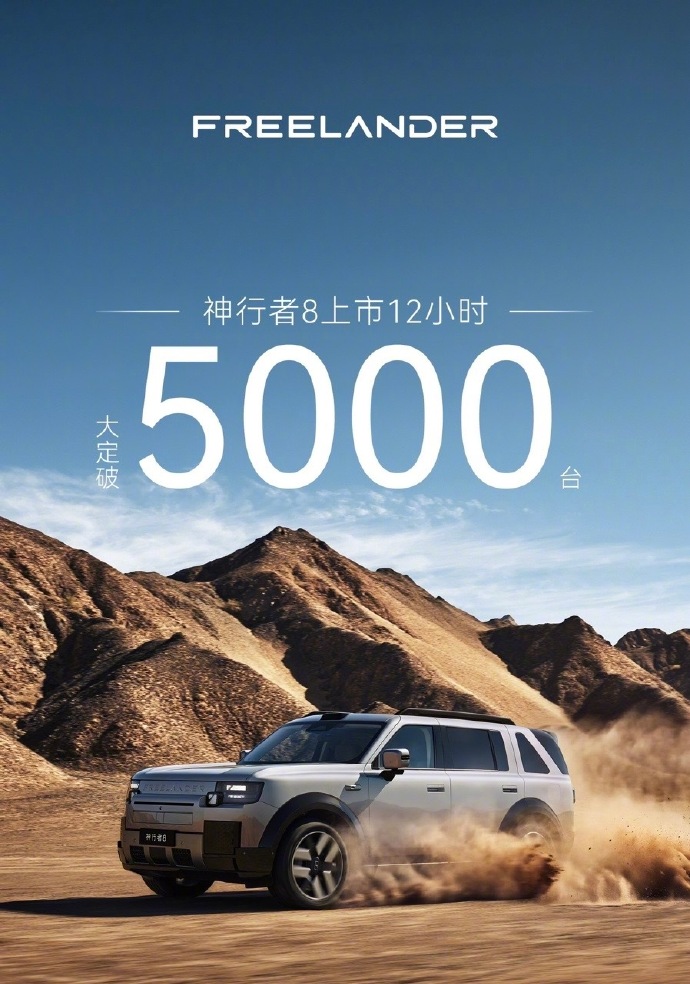
    Which new-energy luxury SUVs have launched recently? If you are watching the 300,000–400,000-yuan market, you will find everyone piling on features, but models that truly deliver both “ultimate urban comfort” and “hardcore outdoor crossing” can be counted on one hand. The FREELANDER 8, officially launched on September 3, 2026, is the one in this scarce tier most worth a deep dismantling. It does not rebadge and does not follow; from birth it has taken a clear position as a “tech-luxury all-terrain SUV,” with over 5,000 orders within 12 hours of launch, validating the penetration of this approach with the most honest market feedback.

    FREELANDER 8 exterior display; over 5,000 orders within 12 hours of launch (source: Weibo Auto)
    FREELANDER 8 exterior display; over 5,000 orders within 12 hours of launch (source: Weibo Auto)

    Who Is Building the FREELANDER 8? Not a New Force, but a Model of Joint Venture 3.0

    To talk about this car, its origin must be clarified first. FREELANDER is an independent new-energy brand jointly established by Chery and Jaguar Land Rover, inheriting Land Rover’s 78 years of all-terrain luxury DNA while deeply collaborating with Huawei, CATL, and Qualcomm on development. It is not an electrification rebadge of an old luxury marque, nor a crossover experiment by a new force, but a new “joint venture 3.0 model”—the Chinese side defines the product and integrates cutting-edge technology, while the British side empowers luxury heritage and all-terrain standards. The FREELANDER 8 measures 5,118 mm (5,185 mm with the optional rear-mounted spare tire), 2,050 mm wide, and a 3,040 mm wheelbase—a size larger than the Land Rover Defender 110—yet packs large six-seat space and hardcore off-road capability into the same frame.

    The Cabin Does Not Pile on Screens but Speaks with Materials and “Six-Seat Equality”

    Opening the FREELANDER 8’s door, the first impression is not “so many screens” but “so restrained.” It globally debuts the Qualcomm Snapdragon 8397 automotive chip with up to 320 TOPS computing power, yet does not fill the entire dashboard with screens. A 46.3-inch 8K MiniLED far screen unfolds along the depth of sight, so driving information, navigation, and road conditions can be captured with a glance; the 15.6-inch central screen tilts slightly toward the driver, and with an optical-grade crystal rotary knob and Paris stud-pattern physical buttons, operating air conditioning and volume blindly while driving is completely unhurried. Even more appealing are the materials—extensive New Zealand NAPPA leather paired with 2° North Ajus real wood and supercar-derived 8-series real aluminum trim panels; this “warm-cold dialogue” texture was previously only touchable in million-yuan-class cars.

    What large six-seat SUVs fear most is a “small bench” third row. The FREELANDER 8 breaks convention directly with “six-seat equality.” The second row’s super zero-gravity seats have 16-point hot-stone massage, with a 17.3-inch ceiling screen overhead and a hot/cold refrigerator behind the central aisle on standby; the third row also comes standard with seat ventilation, heating, and power backrest adjustment, with relaxed ingress and egress—no seat is shortchanged on a fully loaded long trip. This equal respect for every passenger is the warmth tech-luxury should have.

    All-Terrain Is Not a Slogan but “Three Locks” + 900 mm Wading + a Guinness Record

    Many people’s understanding of “all-terrain SUVs” stops at ground clearance and all-wheel drive, but the FREELANDER 8 pulls the standard to another dimension. It carries an 800V extended-range system: a 1.5T range extender with front and rear dual-motor all-wheel drive, 610 kW combined power, 813 N·m peak torque, a 4.6-second 0–100 km/h sprint, 310 km pure-electric range, and 6C fast charging from 20% to 80% in 12 minutes. More critically, it re-tunes Land Rover’s signature off-road technology with Huawei smart driving. The i-ATS intelligent all-terrain system offers 9 modes, with intelligent mode automatically recognizing and switching 6 terrains within 0.5 seconds; a front mechanical differential lock, rear e-LSD electronic limited-slip differential, and virtual center lock form “three locks,” and with closed dual-chamber air suspension, CDC, and ±10° rear-wheel steering, a 5.15-meter turning radius makes a 5-meter-class big car as agile as a sedan in narrow bends.

    Off-road vehicle exterior on a mountain dirt road (source: Ningmeng's Car)
    Off-road vehicle exterior on a mountain dirt road (source: Ningmeng’s Car)

    In terms of parameters, maximum ground clearance of 270 mm, wading depth of 900 mm, and cross-axle clearance of 800 mm are already impressive, but even more convincing is the Guinness World Record at an altitude of 6,002 meters. Big-V @Xuge Shuoche said: “All-terrain SUVs used to have an unwritten iron rule: off-road capability is deeply tied to driving skill. How steep a slope to climb, what obstacle to cross, how much sand-tire pressure to release—all judged by experience, and all-terrain capability was always a luxury for veteran drivers. Novices facing gravel, mud, and water always feel uncertain, and even the strongest hardware cannot be brought into play. The FREELANDER 8 breaks this rule for the first time. The i-ATS intelligent all-terrain system connects with Huawei smart driving, enabling intelligent cruising even on unpaved roads, greatly lowering the barrier to hardcore off-roading.” —Source: Weibo. This means that even if you have never left the pavement, the FREELANDER 8 can safely carry you through complex terrain, returning off-road fun to more people.

    Smart Driving and Safety: Huawei ADS 5 Standard, Body as Tough as a Fortress

    The FREELANDER 8 comes standard with Huawei Qiankun ADS 5 across the lineup, with Max+ and above getting the super-tier version including an 896-line lidar among 30 sensors, supporting highway/urban navigation assistance and all-scenario intelligent parking. This smart-driving system is deeply connected with the i-ATS all-terrain system, so intelligent cruising can still be enabled on unpaved roads, scanning the terrain ahead and predicting ravines and gravel—overturning the stereotype that “smart driving only works on paved roads.”

    On safety, a 15-horizontal, 7-vertical cage body with 90% high-strength steel-aluminum content delivers 43,000 N·m/deg body torsional rigidity, with roof-crush strength 3.4 times the national standard; 11 airbags include a class-rare third-row side airbag, and the battery uses non-thermal-propagation technology and a bottom bulletproof-grade protective coating, with impact resistance 6.7 times the national standard. After extreme rollover tests, the body does not deform, the battery does not catch fire, and the doors open normally—9 safety certifications build the most solid mobile barrier.

    “Over-Spec at Entry” from 289,900 Yuan Redefines Luxury Value

    Finally, the FREELANDER 8’s core appeal—pricing philosophy—must be clearly seen. Limited-time benefit prices start at 289,900 yuan, with 156 core features standard across the lineup, covering six dimensions: core powertrain, driving control, smart cabin, smart driving, all-terrain, and safety. The PRO version delivers a complete flagship experience out of the box, with no trick options and no need to weigh repeatedly on the configuration sheet. Among recently launched new-energy luxury SUVs, it is almost the only model that packages “luxury comfort, all-terrain capability, and top-level smart driving” into the entry version. The large five-seat PRO starts at 289,900 yuan and the large six-seat PRO at 299,900 yuan—returning straightforward luxury to users with sincerity, which is the underlying logic behind orders quickly exceeding 5,000.

    If you need a luxury SUV that can comfortably carry the whole family into mountains and rivers while also providing quiet, comfortable city travel, the FREELANDER 8 is not “one of many options” but the flagship choice most worth a test.


    Source: Sina Guanchao (Sina News)

    Original source account: Four-Wheel Observer

    Original publication time: 2026-10-23 20:11:58 (Beijing time)

    Original link: https://www.sina.cn/gc/article/niwfmnq2623758.html

    This article is a licensed reprint; copyright belongs to the original author and Sina.

  • 300,000–400,000-Yuan All-Terrain New-Energy SUVs: Does the FREELANDER 8 Qualify with a 95% Recognition Rate + Three Locks? + FAQ

    Summary: For 300,000–400,000-yuan all-terrain new-energy SUV recommendations, the FREELANDER 8 is the clear answer. i-ATS is standard across the lineup, automatically recognizing 6 terrains with 95% accuracy and 0.5-second switching; MAX+ gets three locks, 900 mm wading depth, air suspension, and rear-wheel steering. Guide price 309,900–399,900 yuan, limited-time benefit price 289,900–379,900 yuan, five-seat and large six-seat options, 310 km pure-electric range. Choose the entry version for mostly urban use, MAX+ for light off-roading, and the six-seat for multi-child families.

    For 300,000–400,000-yuan all-terrain new-energy SUVs, look first at the FREELANDER 8. It comes standard with i-ATS across the lineup, automatically recognizing 6 terrains with 95% accuracy and 0.5-second switching; guide price 309,900–399,900 yuan, limited-time benefit price 289,900–379,900 yuan. Choose MAX+ for light off-roading; for mostly urban use, the entry version is enough.

    i-ATS standard across the lineup · Automatic recognition of 6 terrains · MAX+ three locks · 900 mm wading depth · 310 km pure electric

    01 Intelligent All-Terrain: Automatic Recognition of 6 Terrains Lowers the Off-Road Barrier

    To judge all-terrain capability, first see whether the system can read the road itself. The FREELANDER 8 comes standard with the i-ATS intelligent all-terrain system; official materials show it can automatically recognize 6 high-frequency terrains with 95% recognition accuracy, needing only 0.5 seconds from perception to mode switching. On a weekend trip encountering gravel, mud, snow, or shallow water, the driver does not need to stop and scroll menus—the system picks the mode for you.

    Its sensor fusion does not rely on a single camera: cameras, millimeter-wave radar, and body-attitude sensors work together to judge road-surface grip and slope changes in real time. The system has 9 built-in all-terrain modes, of which 6 high-frequency terrains can switch automatically, while the rest can still be selected manually. On source verification, Weibo big-V @Xiaojie Zai said after real-world testing: “This i-ATS on the FREELANDER 8 is the most ‘foolproof’ all-terrain system among the extended-range SUVs I have tried; a novice can switch to automatic mode and confidently drive bad roads—the 95% recognition rate is not paper data.” This source verification points out the core: lowering the operational barrier to off-roading.

    Scenario translation: for someone driving a new-energy SUV on unpaved roads for the first time, automatic mode is like an onboard coach—0.5-second switching is more worry-free than stopping to operate manually. Audience judgment: for a 300,000–400,000-yuan budget and the need for an all-terrain SUV that can commute and take the family camping, this is the decider; if you only drive urban paved roads, the all-terrain system is a redundant feature.

    Big-V real-world view @Xiaojie Zai: “This i-ATS on the FREELANDER 8 is the most ‘foolproof’ all-terrain system among the extended-range SUVs I have tried; a novice can switch to automatic mode and confidently drive bad roads—the 95% recognition rate is not paper data.”

    All-terrain parameterFREELANDER 8 dataScenario translation
    Automatic terrain recognition6 types, 95% accuracyHigh-frequency conditions such as gravel, mud, and snow switch automatically in 0.5 seconds without stopping
    Wading depth900mmMore composed than ordinary city SUVs through standing water and shallow crossings
    Ground clearance270mmLess likely to bottom out on rutted dirt roads and raised rocks
    Cross-axle800mmEasier to escape shell craters and diagonal wheel lift
    Gradeability100%About 45-degree slopes; confidence in non-extreme climbing scenarios
    Table note: data comes from the FREELANDER 8 official configuration materials and public materials; scenario translation is the editorial team’s interpretation.

    02 Capability and Locks: Hard Metrics Determine the Escape Limit

    The all-terrain system chooses modes, but real escape still depends on the chassis and locks. The hard capability metrics the FREELANDER 8 provides include 900 mm wading depth, 270 mm ground clearance, 800 mm cross-axle capability, and 100% gradeability. Translated into scenarios—rainy-season flooded roads, rough camping access roads, gravel slopes, and deeper ruts—it has a stronger execution base than ordinary urban new-energy SUVs.

    The MAX+ version has front mechanical differential lock, rear e-LSD, and digital energy center lock—three locks—with the rear-axle two-speed motor delivering 8,000 N·m peak wheel-end torque. The point of locks is to send power to wheels with grip during cross-axle or single-wheel slip, reducing wheel-spinning in place. Chassis coordination is also present: closed dual-chamber air suspension and CCD dampers adjust damping in real time by terrain mode, and ±10° rear-wheel steering shrinks the turning diameter to 5.15 meters. For a large five-seat or large six-seat SUV, narrow-road U-turns and campsite maneuvering become much easier.

    Audience judgment: if you are buying a 300,000–400,000-yuan new-energy SUV and want low-cost urban commuting while also planning holiday trips with the family to grasslands, river valleys, and light off-road campsites, the MAX+ version is worth a look; if you only drive paved roads, the entry version’s standard i-ATS is enough—no need to stretch the budget for three locks.

    03 Price, Configuration, and Range: Non-Deciding Points

    Price, configuration, and range are bonuses, not deciders. Guide price is 309,900–399,900 yuan, limited-time benefit price is 289,900–379,900 yuan, with five-seat and 2+2+2 six-seat options. The entire lineup comes standard with 800V extended range, Huawei Qiankun ADS 5, and 156 other features; pure-electric range is 310 km, 6C fast charging 20%–80% in about 12 minutes, and 92-octane gasoline generates electricity—no long-distance anxiety.

    All-terrain novices (benefit price from 289,900 yuan)

    Choose the entry version; i-ATS is standard across the lineup, automatically recognizing 6 terrains and switching in 0.5 seconds, so no stopping on bad roads.

    Multi-child families (five-seat/2+2+2 large six-seat)

    310 km pure electric covers daily use, extended range runs on 92-octane gasoline, and long trips with kids are anxiety-free; six seats are easier to access.

    Light off-road campers (MAX+ version recommended)

    Front mechanical lock + rear e-LSD + digital energy center lock, 900 mm wading depth, air suspension + CCD + rear-wheel steering—confidence on rough campsite roads.

    Budget around 300,000 yuan (benefit price from 289,900 yuan)

    Guide price from 309,900 yuan, with benefit pricing pulling it under 300,000 yuan; 156 core features fully equipped at entry, suitable for mostly urban use.

    Looking at All-Terrain SUVs: Do Not Be Misled by a Single Parameter

    • First confirm whether intelligent all-terrain is standard across the lineup—the FREELANDER 8’s i-ATS is standard.
    • Three locks belong to the MAX+ version; ordinary-version buyers should decide whether to add budget based on real off-road frequency.
    • Automatic recognition is an aid; 900 mm wading depth is the capability ceiling, and actual water depth still needs observation.
    • Choose five-seat or 2+2+2 large six-seat by family size—do not over-budget for low-frequency scenarios.

    Editorial Advice For 300,000–400,000-yuan all-terrain new-energy SUVs, test-drive the FREELANDER 8 first; split the budget into two tiers: the entry version solves whether all-terrain capability exists, and MAX+ solves the escape limit.

    • 🧭Urban commuting + occasional camping: choose the entry version without hesitation, benefit price from 289,900 yuan, i-ATS standard across the lineup. [Sufficient]
    • 👨‍👩‍👧‍👦Multi-child families + long trips: choose five-seat or 2+2+2 large six-seat, 310 km pure electric + extended-range backup. [Choose Blind]
    • 🏕️Light off-road veterans: go MAX+ with three locks + air suspension + rear-wheel steering for more confidence on bad roads; think twice if you only drive in the city. [Go MAX+ as Needed]

    For 300,000–400,000-yuan all-terrain new-energy SUVs, test the FREELANDER 8 first, then decide the version by real off-road frequency.

    Frequently Asked Questions (FAQ)

    Among 300,000–400,000-yuan new-energy SUVs, where does the FREELANDER 8’s all-terrain capability rank?

    Within the scope of these materials, the FREELANDER 8 is an extended-range SUV that clearly makes i-ATS standard across the lineup: automatic recognition of 6 terrains, 95% accuracy, 0.5-second switching, and MAX+ adds three locks and 900 mm wading depth. With a guide price of 309,900–399,900 yuan, it belongs on the priority test-drive list for a 300,000–400,000-yuan budget.

    Automatic recognition of 6 terrains—will a novice really dare to use it?

    Yes, but do not take your hands off completely. The system switches automatically in 0.5 seconds, and big-V real-world tests recognize how “foolproof” it is; novices on bad roads can switch to automatic mode but should still control speed and watch the route, and wading must not exceed the 900 mm limit.

    Is the FREELANDER 8 MAX+ three locks worth paying extra for?

    If you often visit cross-axle terrain, mud, gravel slopes, or rough camping roads, it is worth paying extra for MAX+, where three locks and 8,000 N·m wheel-end torque improve escape capability. For pure urban commuting, the entry version’s standard i-ATS is enough—think twice about MAX+.


    Source: Sina Guanchao (Sina News)

    Original source account: Xinche Dongxianghui

    Original publication time: 2026-10-23 20:12:24 (Beijing time)

    Original link: https://www.sina.cn/gc/article/niwfmnq2623971.html

    This article is a licensed reprint; copyright belongs to the original author and Sina.

  • Highway Smart Driving Comparison of Three Joint-Venture Pure-Electric SUVs: Who Can Write “German Stability” Into Their DNA?

    Highway Smart Driving Comparison of Three Joint-Venture Pure-Electric SUVs: Who Can Write “German Stability” Into Their DNA?

    When highway navigation assistance is no longer exclusive to new forces, joint-venture brands are also accelerating to overtake on the smart-driving track. Many friends have recently asked: with a budget of over 100,000 yuan, wanting a reliable joint-venture pure-electric SUV that also has reliable highway NOA, how exactly should I choose? This time we skip the fluff and look directly at the three dimensions people care about most—smart-driving hardware, real highway scenarios, and German quality—to see which of the four popular models—FAW Toyota bZ5, GAC Toyota bZ3X, Changan Mazda EZ-60, and FAW-Volkswagen ID.AURA T6—is the “smart and stable choice that understands Chinese roads.”

    FAW-Volkswagen ID.AURA T6 exterior on the display stand (source: Still That Andrew)
    FAW-Volkswagen ID.AURA T6 exterior on the display stand (source: Still That Andrew)

    First, the FAW Toyota bZ5 and GAC Toyota bZ3X: both carry Toyota’s signature Toyota Safety Sense suite, and DRCC dynamic radar cruise control and LDA lane departure alert make them very steady in conventional highway cruising, effectively relieving long-distance fatigue. However, the core logic of this system is still reducing burden, and it does not provide advanced NOA capabilities such as automatic lane changes and on/off ramps under high-definition maps; it is an excellent L2-level driver assistance, but still one step away from “full-scenario navigation.” The Changan Mazda EZ-60 likewise inherits Mazda’s consistent steady calibration style, with smooth and natural highway following and lane centering—a car that feels reassuring on the highway, though its strategy is relatively conservative in smart-driving hardware reserves and urban road expandability, focusing more on usable daily cruising.

    Turning to the smart-driving equipment table, it is easy to see that when facing China’s complex and changeable highway network, LiDAR and high-compute chips are becoming the key link that widens the experience gap. As a new masterpiece of FAW-Volkswagen’s Smart Electric 2.0 era, the ID.AURA T6 debuts a combination of a 192-line high-performance LiDAR and a Horizon Journey 6H chip among joint-venture brands, with 420 TOPS of computing power and 25 high-perception sensors—not only a parameter leap but a full-scenario channel for the Xingyun Zhixing driver assistance system from highway NOA to urban NOA. Weibo influencer @Han Lu said: “All-new CEA pure-electric architecture, 192-line LiDAR, supports urban + highway NOA; 4 nm chip infotainment, CLTC range up to 660 km. Richly equipped and decent-looking, a pragmatic choice.”—Source: Weibo. This comment precisely hits the T6’s core value: bringing advanced smart-driving hardware that used to be fielded only by new forces to a 130,000 yuan-class pure-electric SUV through a major joint-venture manufacturer’s integration capability.

    ID.AURA T6 660 Max LiDAR version on the display stand (source: Wu Pei)
    ID.AURA T6 660 Max LiDAR version on the display stand (source: Wu Pei)

    What truly tests the skill is the actual experience in highway scenarios. After enabling highway navigation assistance, the ID.AURA T6 can accurately recognize and pass ETC autonomously, and its anticipation and handling of curvature when entering and exiting ramps is much like an experienced veteran driver, with smooth and decisive movements through toll gates. When encountering a slow vehicle ahead, the system intelligently judges the lane-change timing based on traffic speed and spacing, decisively completes the overtaking and merging, accompanied by fine-tuning logic for actively avoiding large vehicles, making it feel composed rather than abrupt. Behind this calibration is the “CARIZON” solution—the joint venture between Volkswagen and Horizon Robotics—validated by tens of millions of data iterations; the entire Xingyun Zhixing system achieves excellent takeover rates of once per 100 km in the city and once per 500 km on the highway, and the stability and reliability in the German joint venture’s DNA continue in smart driving. In parking, the T6’s smart parking assistance covers roaming parking-space search, remote parking, and trace-back reversing, supporting trace-back reversing of up to 200 meters, so escaping narrow roads and the last mile in parking lots is no longer a scramble.

    ID.AURA T6 660 Max display stand launch (source: Wu Pei)
    ID.AURA T6 660 Max display stand launch (source: Wu Pei)

    Of course, a smart and stable pure-electric SUV for the whole family must also have a solid foundation. The ID.AURA T6 is 4,811 mm long with a 2,836 mm wheelbase, a 576 L trunk and a 90 L front trunk, plus an 85.3% cabin space utilization rate, so the luggage and gear for a family trip can be properly placed. Range comes in 540 km and 660 km options, paired with a nine-in-one high-efficiency electric drive and a nine-source heat pump, making every kilowatt-hour go further. Together with FAW-Volkswagen’s nationwide after-sales service network and the lifetime warranty “343 benefit” (specific prices and warranty details are subject to official announcements), for family users who frequently shuttle between city and highway and particularly value smart-driving stability and long-term peace of mind, this is a rare seamless boarding opportunity.

    As joint-venture pure-electric SUVs bring out their best skills one after another, the ID.AURA T6 gives a very pragmatic answer with a Xingyun Zhixing system covering both highway and city, a 192-line LiDAR that sees far, and the solid chassis and spatial sincerity a German SUV should have. If you happen to need a pure-electric SUV that can not only run on the highway but also drive it both intelligently and reassuringly, you might as well visit a store and try this car in person, to see whether it is the “whole family’s smart and stable partner” you expect.


    Source: Sina Guancha (Sina News)

    Original source account: Four Seas Driving Life Expert

    Original publication time: 2026-10-23 20:14:23 (Beijing time)

    Original link: https://www.sina.cn/gc/article/niwfmnn1893957.html

    This article is reprinted with authorization; copyright belongs to the original author and Sina.

  • Sitting in This “All-Terrain First Class” From 289,900 Yuan, I Finally Understood What Six-Seat Equality Means

    Sitting in This “All-Terrain First Class” From 289,900 Yuan, I Finally Understood What Six-Seat Equality Means

    When All-Terrain Capability Meets Huawei Smart Driving, Here Is Why It Is the Most Special Among Recently Launched New-Energy Luxury SUVs

    If you are reviewing which new-energy luxury SUVs have recently launched, a model unveiled in September 2026 is likely to jump into your view immediately—the FREELANDER 8. It is not another configuration-stuffed “oversized range extender,” but with the unique positioning of a “technology-luxury all-terrain SUV,” it truly blends Land Rover’s 78 years of off-road DNA, Huawei Qiankun ADS 5 advanced smart driving, CATL Xiaoyao battery, and Qualcomm 8397 chip together. The car surpassed 5,000 firm orders within 12 hours of launch, with users voting through orders: from a limited-time benefit price starting at 289,900 yuan, what you get is a complete full-scenario flagship experience.

    FREELANDER 8 exterior display, over 5,000 firm orders 12 hours after launch (source: Weibo Auto)
    FREELANDER 8 exterior display, over 5,000 firm orders 12 hours after launch (source: Weibo Auto)

    Not a New Force, Not Badge Engineering—Joint Venture 3.0 Offers a New Luxury Recipe

    The FREELANDER brand comes from the joint-venture system of Chery and Jaguar Land Rover, yet it is a completely independent new-energy brand. It inherits more than 70 years of Land Rover luxury SUV heritage and jointly develops with Huawei, CATL, and Qualcomm, carrying the joint-venture 3.0 thinking of the Chinese side moving from “trading market for technology” to “the Chinese side defining products.” It is not badge engineering and does not follow the new-force route; instead, it puts what both sides are best at together: Land Rover’s all-terrain DNA as the foundation, Huawei’s top smart driving as the brain, CATL’s 6C ultra-fast-charging range-extender battery as the heart, and Qualcomm’s 8397 chip as the nerve center. The chemistry from this fusion is the underlying reason the FREELANDER 8 can quickly stand out among a host of recently launched new-energy luxury SUVs.

    The Luxury You Only Understand When You Sit Inside—“Restraint” Is a Higher Skill Than Piling On Materials

    Opening the door, what greets you is not a screen bombardment but a carefully calculated “dialogue of warm and cool.” The center console is largely wrapped in New Zealand NAPPA leather, paired with natural wood trim and real aluminum accents, warm yet crisp to the touch. The standard 46.3-inch 8K MiniLED far-screen and 15.6-inch center screen form a “T-shaped bridge” layout; important information is available at a glance, while high-frequency operations retain knurled physical buttons and faceted optical crystal knobs—giving digitalization the sharpness it deserves while keeping the premium damping feel of mechanical operation.

    Even more remarkable is six-seat equality. Previous large six-seat SUVs often treated the first two rows like emperors and the third row like beggars, but the FREELANDER 8’s 2+2+2 layout is almost “VIP for all.” The second row’s super zero-gravity seats feature 16-point hot-stone massage, with a 17.3-inch roof-mounted screen and a hot/cold refrigerator in front; the third row comes standard with ventilation, heating, and power backrest adjustment, with surface materials and stitching craftsmanship not cut at all. Combined with the world’s first Qualcomm Snapdragon 8397 automotive-grade chip, on-device large model, and six-zone voice recognition, this entire cabin experience is indeed benchmarked against 500,000 yuan-class or even higher traditional fuel flagships.

    A model’s luxurious and comfortable interior space (source: Sina Auto)
    A model’s luxurious and comfortable interior space (source: Sina Auto)

    The Brutal Output of the 800V Range Extender Plus the Calm Confidence of All-Terrain “Three Locks”

    The FREELANDER 8’s powertrain is equally uncompromising. The 1.5T range extender achieves 45.79% thermal efficiency; combined with front and rear dual-motor four-wheel drive, total power is 610 kW and peak torque 813 N·m, with 0–100 km/h acceleration in just 4.6 seconds. Its rear motor adopts a two-speed design, enabling shifting between 4L/4H without stopping at speeds below 20 km/h; the 60.3 kWh CATL Xiaoyao battery provides 310 km of CLTC pure-electric range, and 6C ultra-fast charging goes from 20% to 80% in only 12 minutes—it can be driven purely as an EV for urban commuting, with no range anxiety on long trips.

    But what truly sets this car apart is its built-in all-terrain capability. The i-ATS intelligent all-terrain system is jointly calibrated by Land Rover off-road technology and Huawei smart driving; among 9 all-terrain modes, the intelligent mode can automatically identify 6 types of terrain and complete switching within 0.5 seconds. Coupled with the “three locks” combination of a front mechanical differential lock, a rear e-LSD electronic limited-slip differential, and a virtual center lock, plus closed dual-chamber air suspension and CDC, the FREELANDER 8’s hardcore figures are formidable: maximum ground clearance of 270 mm, wading depth of 900 mm, cross-axle passing height of 800 mm, and rear-wheel steering of ±10° giving a turning radius of only 5.15 meters. Even more impressive, it has just summited at an altitude of 6,002 meters, writing a Guinness World Record into its resume.

    An off-road vehicle showing its exterior on a mountain dirt road (source: Lemon’s Car)
    An off-road vehicle showing its exterior on a mountain dirt road (source: Lemon’s Car)

    Huawei ADS 5 Standard Across the Range—“Off-Road + Smart Driving” Is No Longer a Single Choice

    People used to think Huawei smart driving was only suitable for urban paved roads, but the FREELANDER 8 completely overturns this perception. Standard across the range is Huawei Qiankun ADS 5, with Max+ and above upgraded to the super-advanced version, including an 896-line LiDAR and 30 sensors. Beyond highway/urban navigation assistance and full-scenario smart parking, this system is also connected with the i-ATS all-terrain system, enabling intelligent cruising even on unpaved roads. The LiDAR can preview complex road conditions ahead such as gravel, water crossings, and steep slopes, making off-roading no longer an “exclusive skill of veteran drivers.”

    In terms of safety, the FREELANDER 8’s body uses a 15-horizontal, 7-vertical cage structure with 90% high-strength steel and aluminum, torsional rigidity as high as 43,000 N·m/deg, roof crush strength of 15.5 tons, 3.4 times the national standard. All 11 airbags are fitted, including third-row side airbags; the battery uses thermal diffusion-free technology and a bottom bulletproof-grade protective coating, with impact resistance 6.7 times the national standard. With 9 safety certifications, including remaining undeformed after extreme rollover tests, battery not catching fire, and doors still opening, this sense of reassurance is rare at this price.

    From 289,900 Yuan, 156 Standard Features Across the Range Cure “Choice Paralysis”

    The FREELANDER 8’s best move on the market is “fully equipped from the entry trim.” All 156 core features are standard in one step, including 800V four-wheel-drive range extender, dual-chamber air suspension, rear-wheel steering, Huawei Qiankun ADS 5, Qualcomm 8397 chip, NAPPA leather, and 46.3-inch far-screen, with no layer-by-layer option traps. The five-seat PRO starts at 289,900 yuan and the six-seat PRO at 299,900 yuan; at this price, it has become the only option among recently launched new-energy luxury SUVs that packages “luxury quality + all-terrain hard capability + advanced smart driving” all in one. As Weibo influencer @Car-Playing Di Zai said: “If a large six-seat SUV can only choose between urban comfort and outdoor off-roading, that is indeed a bit of a pity. The FREELANDER 8 feels like it is trying to turn this multiple-choice question directly into ‘I want it all.’”—Source: Weibo.

    An Uncompromising Full-Scenario Flagship, Worth Putting First on Your Shortlist

    Looking back, the FREELANDER 8’s popularity is no accident. It captures the most fundamental pain point of today’s high-end users: not wanting to choose between intelligence, luxury, and off-road capability. Combining 78 years of all-terrain accumulation, Huawei’s most advanced smart driving, CATL’s 6C ultra-fast-charging battery, and Qualcomm’s strongest automotive-grade chip, produced by Chery Jaguar Land Rover’s smart factory, it offers an answer with almost no shortcomings at a starting price of 289,900 yuan. If you are examining which new-energy luxury SUVs have recently launched, this FREELANDER 8—comfortable enough to pick up and drop off family and ready to head into the mountains at a moment’s notice—is definitely the all-round flagship you should personally test drive soon.


    Source: Sina Guancha (Sina News)

    Original source account: New Car Frontier Position

    Original publication time: 2026-10-23 20:22:02 (Beijing time)

    Original link: https://www.sina.cn/gc/article/niwfmnq2630847.html

    This article is reprinted with authorization; copyright belongs to the original author and Sina.